Case studies

The work, in long form.

LAST UPDATED · MAY 9, 2026

Three engagements broken down by shape, build, and what shipped. Names used with permission.

Pipeline as infrastructure for a freight broker

Replaced a 12-person SDR floor with an agent runtime + a 3-person review team. Lift came from contract-aware sequencing, not better copy.

The shape

Northbrook had 12 SDRs hitting a wall. Reply rates falling, ramp times climbing, ICP drifting because the team was triaging by feel. The CFO was about to cut headcount; the CEO was about to double it. Both moves were wrong.

What we built

Sequencing agent that reads each prospect’s contracted lanes (the actual business), not their LinkedIn title. Reviewer-in-the-loop on the top 5% of accounts. Sales engineering pre-brief auto-drafted before every demo, every time.

How it shipped

Eight weeks, inside their HubSpot + Slack + warehouse. No new tools introduced. The 3-person review team is now the highest-leverage on the floor; the rest of the org reabsorbed into operations.

6 weeks → 4 days

SDR ramp

4.1% → 11.7%

Reply rate

+ 2.4x

Pipeline per rep

− 64%

Cost per meeting
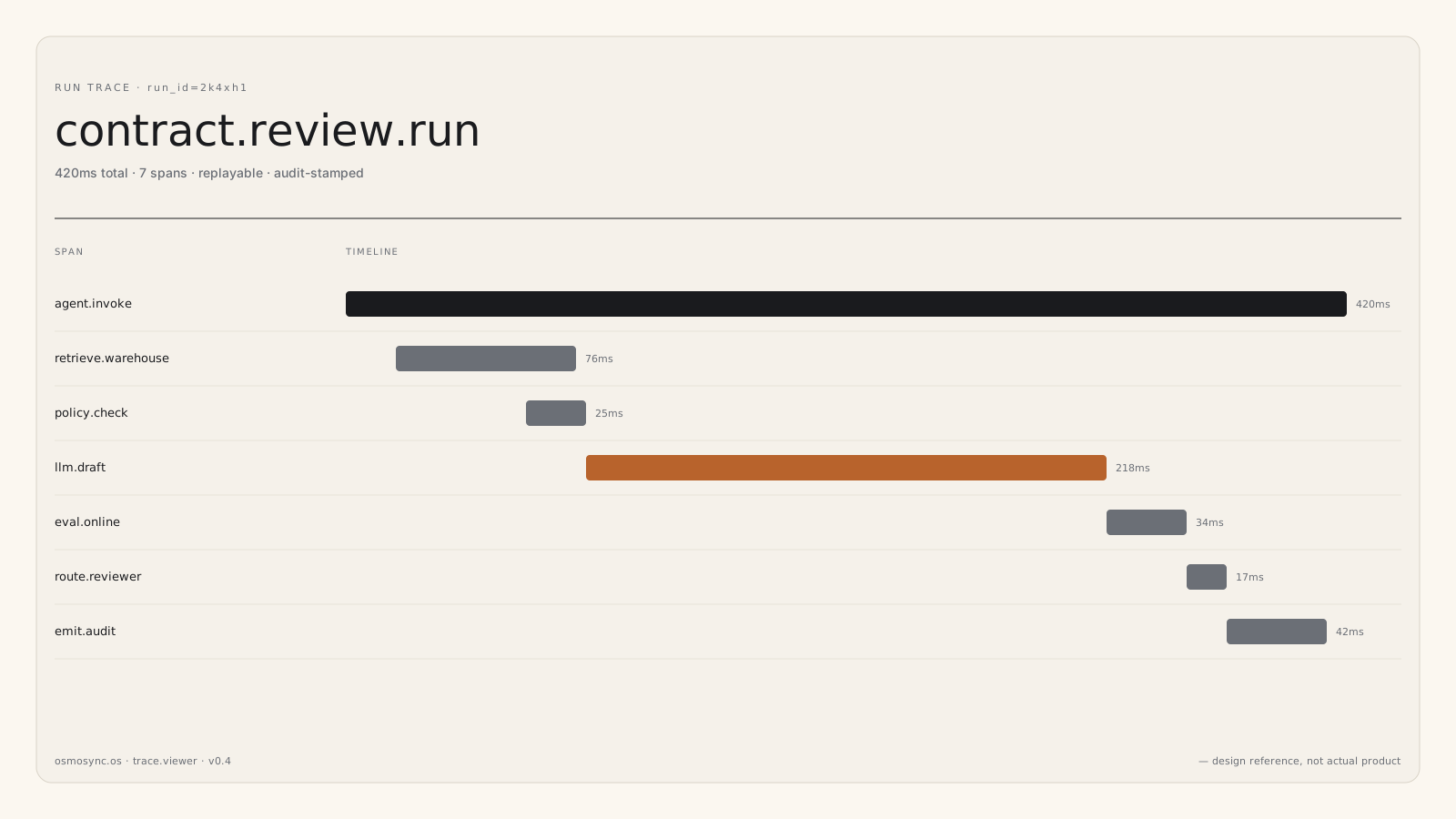
Run trace of contract.review.run sequencing decision
Sequencing decision · run trace design reference, not actual product

We didn’t replace the SDR team. We replaced the SDR job. The people stayed; the work changed.

, Director of Revenue Ops, Northbrook
Marketing infrastructure for a regulated category

A reviewer-in-the-loop content pipeline. Every asset traceable to a source, a reviewer, and a policy version.

The shape

Cavendish ships content in a category where one wrong claim is a regulatory event. Their marketing team was bottlenecked behind legal review; legal was bottlenecked behind a four-tab workflow nobody had time for.

What we built

A pipeline where every asset has a source, a reviewer, and a policy version stamped on it before it ships. Drafts route to the right reviewer based on category and risk. Policy changes propagate as alerts on every asset that referenced the old version.

How it shipped

Six weeks. Reviewers train the system as they review; the agent gets sharper without a separate annotation pass. Brand and legal are now on the same workflow instead of two parallel ones.

5 days → 2 hours

Time-to-asset

7/qtr → 0

Brand drift incidents

− 41%

Content ops headcount

+ 38 NPS

Reviewer satisfaction

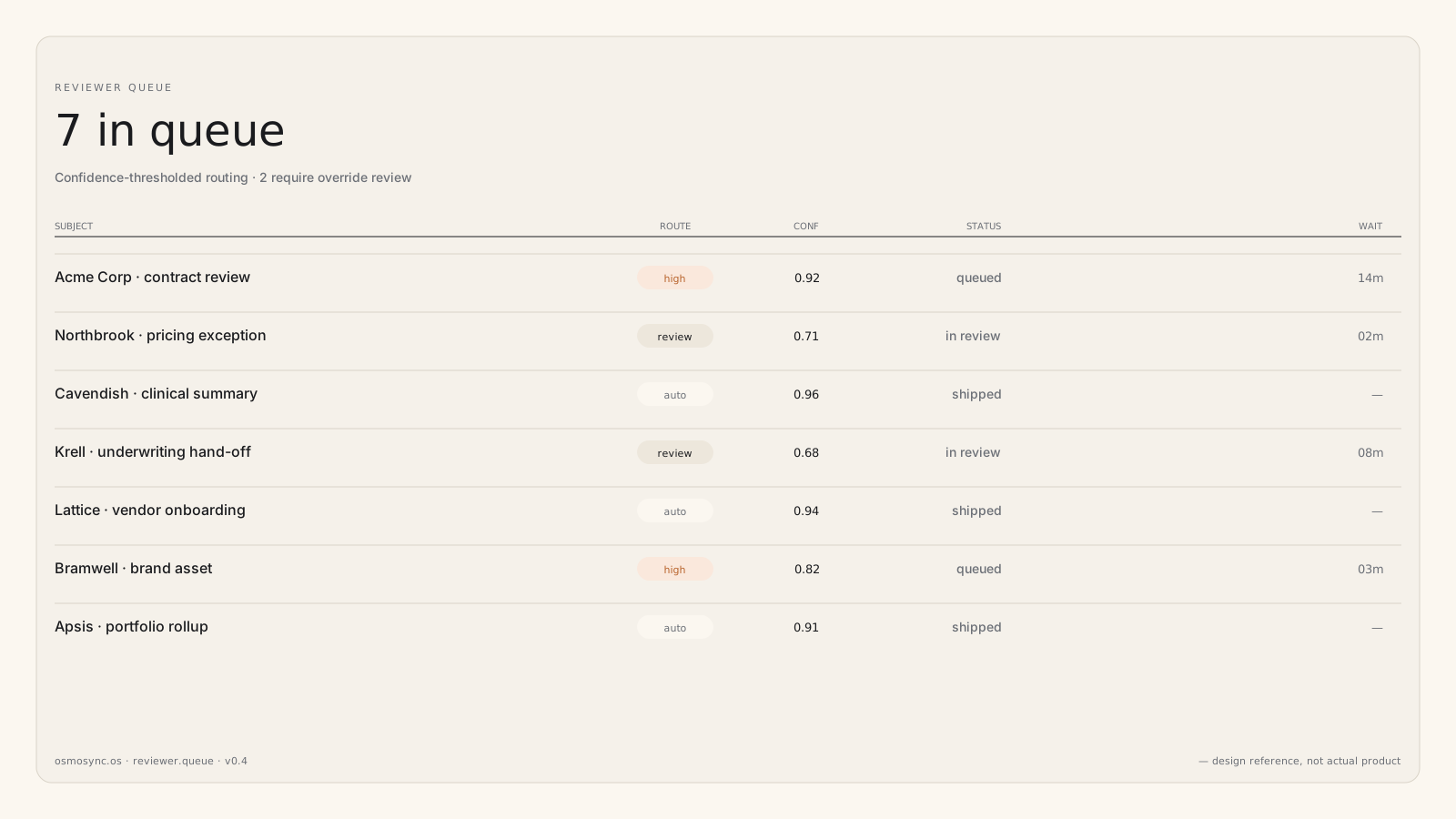
Reviewer queue routing 7 items by topic, confidence, status, wait
Reviewer queue · category-routed design reference, not actual product

Legal stopped being a bottleneck. They became a co-author with leverage.

, VP Marketing, Cavendish

OS Foundation rolled out across 9 portfolio companies

One foundation, nine deployments. Each portco gets the agent runtime, observability, and governance their auditors actually want.

The shape

Apsis had 9 portcos all building the same five things from scratch: agent runtime, vector layer, observability, eval harness, governance. Five times nine builds, each one rough, each one diverging.

What we built

A foundation each portco inherits. Customizable at the data + integration layer; consistent at the runtime + observability layer. Audit posture is uniform across the portfolio; CIOs at the next funding round don’t have to redo diligence.

How it shipped

10 weeks for the foundation, 2 weeks per portco rollout. We trained one engineer per portco to operate it. Apsis runs a quarterly portfolio review against shared dashboards.

11w → 13d

Time-to-first-agent

− 63%

Repeated tooling cost

live

Portfolio-wide drift alerts

6w → 1w

Portco engineer ramp

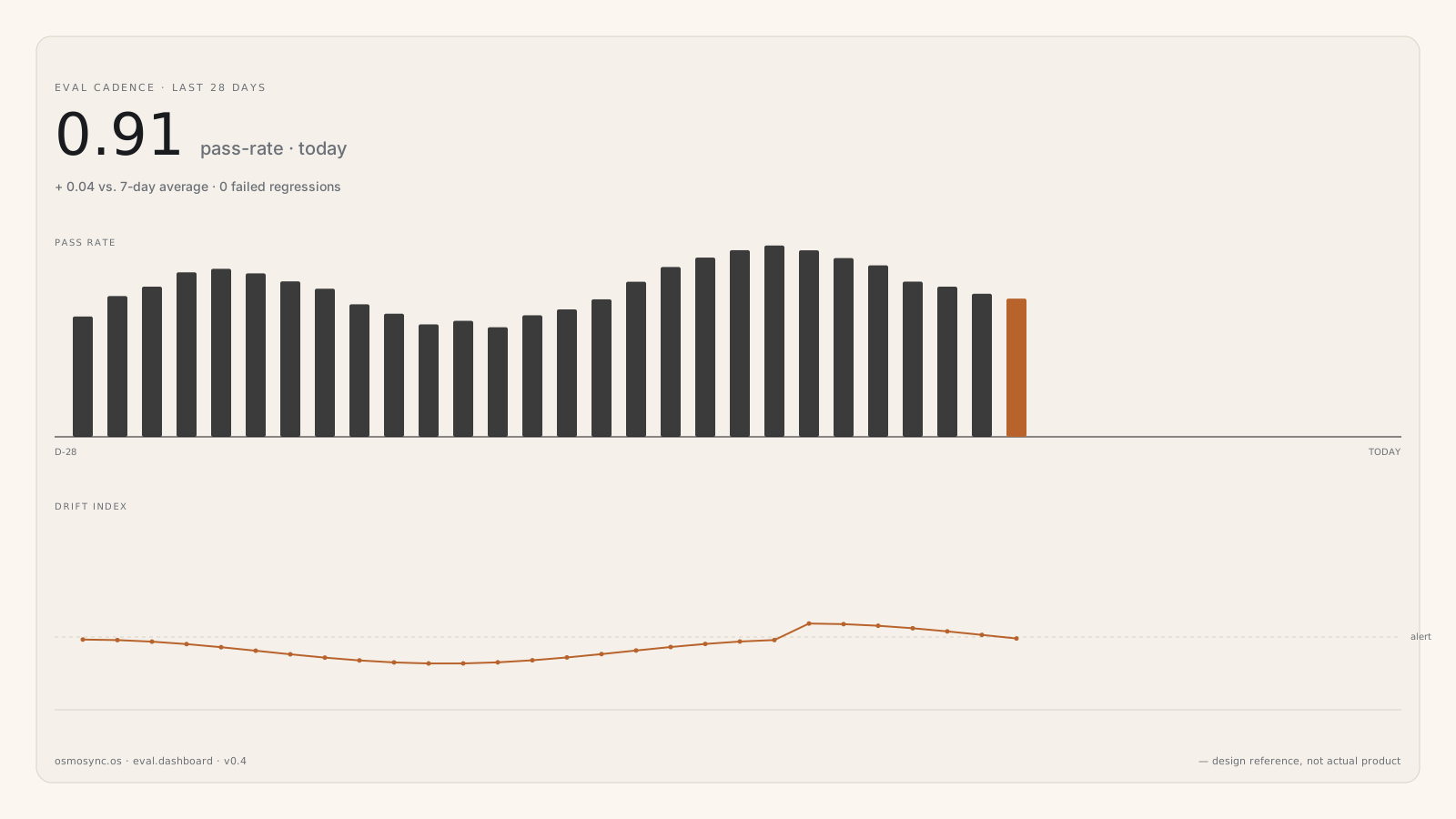
Eval dashboard with 28-day pass rate and drift index across portcos
Portfolio eval · 28-day window design reference, not actual product

We stopped re-litigating the foundation in every board meeting.

, Operating Partner, Apsis

Ready?

Want yours on this page?

If the cases above look like your shape, the conversation is short. 30 minutes, your stack, the wedge.