Sales Infrastructure
Pipeline as infrastructure, not a stack of tools.
We build the systems that source, qualify, route, and convert pipeline. One coherent layer running inside your CRM and your warehouse, owned by you. Read the Sales OS playbook.
What's broken with current sales stacks
"AI sales" is a category of tools. Pipeline is a system.
Three reasons the AI sales category hasn't moved the number for your team. None of them are about the model. See how the GTM system actually runs.
The stack is fragmented.
Six to ten point tools, each owning a sliver of the pipeline. Nothing learns from anything else, and the data is spread across systems that don’t agree.
The "AI sales" tools are templates.
Most of the AI sales category is one workflow with a chat UI on top. The same template runs against every prospect. Reply rates collapse the moment volume scales.
Reps end up doing operator work.
When the system can’t think, the highest-paid people on the team click through tabs to make up for it.
What we build
Four pieces, one coherent layer.
All four ship into the same foundation. Same data, same audit trail, same governance. Read the full AI sales team breakdown.
01 Lead engines
Trusted, ranked queues
Multiple sources, hiring intent, ICP filters, audience signals, internal triggers, into one ranked queue your reps actually trust.
02 Outreach
Reply-aware orchestration
Email, LinkedIn, voice, SMS. One layer with per-account budgets, per-prospect routing, and reply-aware logic.
03 Conversation
Only the replies that need a human
Reply classification, sentiment, hand-off triggers. Reps see only the conversations that need a human.
04 CRM
A system of record, not a graveyard
The CRM stops being the place dirty data lives and becomes the layer agents write to under contract.
What it looks like
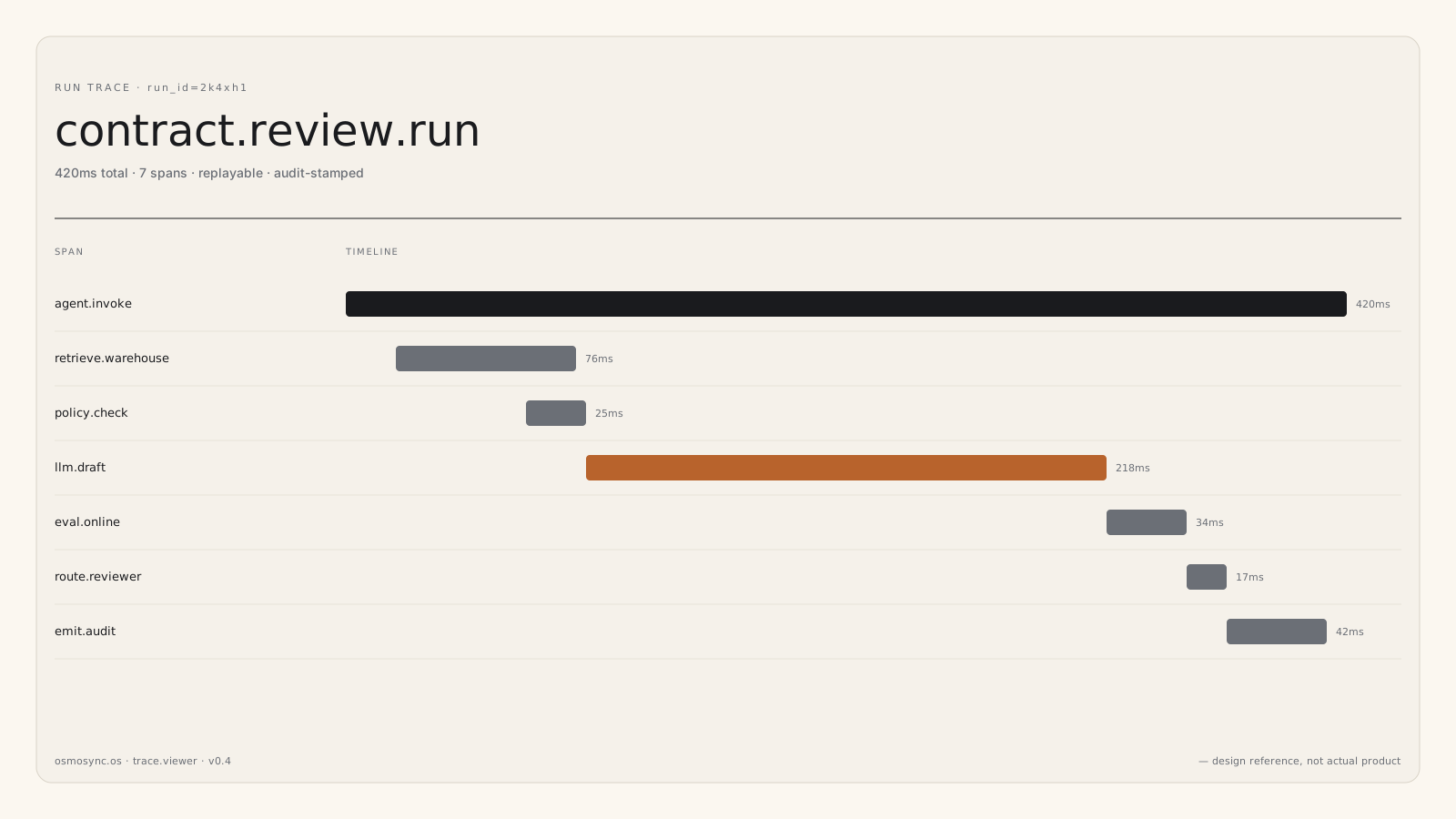
Every decision, replayable.
When a sequence fires or a reply gets routed, the trace is queryable, attributable, and reversible. Drift is detected, not discovered.
How we work
Consult. Build. Scale.
One engagement, three phases. Outcomes shipped, not seats sold.
Consult
Map the foundation that's actually missing.
A 30-minute consultation, then a focused audit. We trace the systems you have, the seams between them, and the agentic surface that should replace the manual middle.
Deliverables
- Stack + workflow audit
- Foundation blueprint
- Build plan with milestones
What we need from you
- Read access to your stack
- 2× working sessions
- A decision-maker on each call
Build
Ship the OS into your stack, not next to it.
We build inside your environment. Data plumbing, agent runtime, integrations, observability, governance, and the pillar layer on top. Weekly demos, no theatre.
Deliverables
- Agent runtime + integrations
- Pillar layer
- Observability + governance
What we need from you
- Engineering point of contact
- Sandbox environment
- Domain experts for evals
Scale
Operate, improve, and compound.
We run with you. Monitor traces, ship evals, expand the agent surface, retire what doesn't earn its place. Outcomes shipped, not seats sold.
Deliverables
- Eval + observability cadence
- Quarterly roadmap
- New surfaces shipped monthly
What we need from you
- Outcome targets
- Quarterly reviews
- Trust to retire dead workflows
What you keep
Your code, your stack, your data, your audit trail. We are partners, not vendors.
Questions
The questions sophisticated buyers ask before they commit.
Four answers. The full library lives at the homepage Q&A.
Q1 What is the difference between Acquisition OS and Sales OS?
What is the difference between Acquisition OS and Sales OS?
Acquisition OS fills the calendar. Cold email, LinkedIn, voice, signal-based prospecting, lead routing. Every channel that turns a stranger into a booked meeting. Sales OS closes the deal. Pre-call research, live call assist, follow-up, proposals, deal-stage hygiene. Everything between booked and closed-won. Two sub-OSes, one shared brain.
Q2 Is this just sales automation with extra steps?
Is this just sales automation with extra steps?
Automation is one layer of six. The other five (context, live signal, agents, command center, mobile) are what let the system decide, not just execute. Take any away and you are back to automation.
Q3 What happens when a sales tool we depend on gets disrupted?
What happens when a sales tool we depend on gets disrupted?
The OS continues. Vendors live inside the integration boundary. The agent layer talks to a contract, the contract talks to the vendor. Swap the vendor, the agents do not notice. That is what swappability looks like in production.
Q4 Do we own the pipeline data and the agents?
Do we own the pipeline data and the agents?
Yes. The OS lives in your environment, your CRM, your warehouse, your domains. Your context, your agents, your pipeline data, your asset, permanently. When the engagement ends, the OS keeps running.
Ready?
Build pipeline as infrastructure.
30-minute consultation. Bring your real stack and a real number you want to move. We'll tell you what we'd build before either side commits.